
June 24, 2026
Permission Marketing for Outbound Sales Campaigns


Permission marketing for outbound campaigns: How to earn attention before asking for a meeting
Most outbound campaigns ask for too much too early.
A stranger gets a connection request, a cold email, or a LinkedIn message, and within two lines the sender is already asking for time. Sometimes the message is dressed up with a first-name token or a recycled sentence about the prospect's company. The ask is still the same.
"Can we book 15 minutes?"
People are tired of that.
Permission marketing gives outbound teams a better way to think about the first touch. The goal is to earn enough attention to continue the conversation. That might mean asking for interest before sending details, offering something useful before pitching, or using a soft CTA that gives the prospect an easy way to say yes, no, or "send more."
For those doing sales, permission marketing can make outbound campaigns feel less like interruption and more like a useful first step.
That matters because outbound still works when the message feels relevant. It fails when every touchpoint feels like a shortcut.
What permission marketing means in outbound sales
Permission marketing is usually tied to opt-in marketing, newsletters, and audiences who have already asked to hear from a brand. Outbound is different because the prospect usually has not raised their hand yet.
That does not make permission irrelevant. It makes permission smaller.
In outbound sales, permission can look like this:
"Open to me sending over the short version?"
"Would it be useful if I shared a few examples?"
"Worth sending the checklist?"
"Should I send the details, or is this not a priority right now?"
These are small asks. They give the person control. They also lower the pressure on the first message, which is where many outbound campaigns get too heavy.
Permission-based outbound is active. You are still reaching out. You are still starting the conversation. The difference is that you stop treating a cold lead like someone who already agreed to a sales process.
That shift changes the tone of the whole campaign.
Why permission-based outbound performs better
Most sales outreach automation focuses on volume. More leads. More messages. More follow-ups. Volume has a place, but it breaks down fast when every prospect receives the same pitch.
Permission marketing adds friction in the right place. Before you ask for a meeting, you ask whether the topic is useful. Before you send a long explanation, you ask whether they want the context. Before you follow up five times, you make the next step easier to accept or reject.
That helps outbound campaigns in a few ways.
First, it makes the message easier to answer. A prospect may not be ready to book a call, but they might reply with "sure, send it over." That reply gives your AI sales agent or sales rep a real opening.
Second, it reduces the feeling of pressure. A softer ask feels more human because it sounds like the way people actually communicate. Most people do not walk into a room, introduce themselves, and ask for a meeting. They test interest first.
It also gives you better data. When someone says yes to more information, clicks a resource, replies with an objection, or engages with a LinkedIn post, your next step can be based on behavior instead of a fixed sequence.
That is where AI outreach automation becomes much more useful. The AI should not only send more messages. It should help decide what kind of message the prospect has earned.
Permission starts before the first message
A permission-led outbound campaign starts with lead selection.
If you reach out to the wrong person, no amount of friendly wording will fix the campaign. The prospect will still feel like they were put on a list.
This is why intent-based lead scoring matters. A good outbound campaign should look at signals before the first touch, such as recent hiring, company growth, role changes, content activity, technology used, funding, new markets, or public buying signals.
The goal is to answer a basic question before sending anything:
Is there a real reason this person might care right now?
When the answer is yes, the first message becomes much easier to write. You can reference a real trigger. You can keep the pitch short. You can ask for a small next step because the relevance is already there.
That is the difference between permission marketing and generic outreach. Permission starts with the prospect's context.
The first ask should be small
A lot of outbound campaigns fail because the CTA is too big for the relationship.
"Book a demo" is a big ask.
"Can I send over two examples?" is smaller.
"Want the short version?" is smaller.
"Should I close the loop?" is smaller still.
Small asks work because they match the trust level of the moment. A cold prospect may not trust you enough to give you calendar time, but they may trust you enough to let you send a short explanation.
That reply matters. Once someone responds, the conversation changes. You can answer their actual concern instead of guessing. You can route the conversation to a human or let an AI conversation agent handle the next step based on the reply.
The best outbound campaigns do not rush every prospect toward the same CTA. They let interest build.
Personalization has to be useful
Personalized outbound has gotten weird.
A lot of messages now include fake personalization, like a compliment about a post the sender barely read or a generic line about company growth. Prospects can tell. It feels worse than no personalization because it uses their information without adding anything useful.
Good personalization should explain why you are reaching out.
A better message might reference a hiring trend, a new role, a public initiative, a tool the company uses, or a market change that connects to your offer. The prospect should be able to see the reason in one or two sentences.
For example:
"Saw your team is hiring for two outbound roles. Teams usually start looking at LinkedIn and email outreach automation around that point because manual prospecting gets hard to manage once more reps are involved. Open to me sending over how Alsona handles account rotation and AI follow-up?"
That message has a reason. It connects to a likely business problem. It asks for permission before sending more.
This is where AI can help, but only if it is doing real research. AI-generated outreach that rewrites the same pitch in different words is still generic. AI outreach automation becomes valuable when it uses context from the prospect's company and timing to decide what to say next.
Permission marketing works well across LinkedIn and email
Permission-based outbound fits multi-channel outreach because each channel has a different level of trust.
LinkedIn can be useful for the first touch because the prospect can see your profile, company, and shared context. Email can carry more detail once the prospect shows interest. Follow-ups can reference prior behavior, such as a reply, profile view, connection acceptance, or link click.
The mistake is treating every channel like a place to paste the same pitch.
A LinkedIn connection request should be short. A follow-up after acceptance can ask whether a topic is relevant. An email can provide the fuller version if the prospect has shown interest or if there is a strong reason to reach out directly.
The campaign should feel like one conversation, even when it moves between LinkedIn and email.
That is one reason a unified inbox matters. If replies, labels, sentiment, and follow-up history sit in different places, it becomes harder to respect what the prospect has already told you. A permission-led campaign depends on memory. If someone says "not now," the system needs to know that. If someone asks for details, the next message should not act like they never replied.
Examples of permission-based outbound messages
Here are a few message styles that work well in outbound campaigns.
The interest check
"Hi {{first_name}}, saw {{company}} is expanding the sales team. Alsona helps teams run LinkedIn and email outreach from one place, with AI handling follow-ups and reply sorting. Open to me sending the short version?"
The useful resource ask
"Hi {{first_name}}, I put together a short breakdown on where outbound campaigns usually lose replies after the first touch. Since you work with {{audience_or_function}}, I thought it may be relevant. Want me to send it over?"
The soft objection path
"Hi {{first_name}}, I know outreach tools can feel like more software to manage. Alsona is built for teams that want AI to help with prospecting and follow-up without adding a messy setup. Worth sending a quick example?"
The LinkedIn connection follow-up
"Thanks for connecting, {{first_name}}. I noticed {{company}} is focused on {{trigger}}. We help teams turn intent signals into outbound campaigns across LinkedIn and email. Should I send over a quick overview?"
The close-the-loop follow-up
"Hi {{first_name}}, closing the loop here. If improving outbound quality is on the radar, I can send over how Alsona scores leads and writes context-aware messages. If it is not a priority, no worries."
These messages work because they ask for a response before forcing the full pitch. They also give the prospect an easy way out, which makes the conversation feel less trapped.
How AI sales agents fit into permission marketing
AI sales agents can make permission-based outbound easier to run because they can respond to the prospect's actual behavior.
If a prospect asks for pricing, the AI can answer or route the conversation. If someone says they already use another tool, the AI can respond with the right comparison. If someone is interested but busy, the AI can follow up later with the right context.
The value comes from using AI to keep the conversation relevant.
A fixed sequence treats every silence the same. A permission-led AI workflow should read the reply, understand intent, and decide what should happen next. That could mean sending a resource, asking a clarifying question, pausing outreach, creating a CRM task, or handing the thread to a human.
This is also where sentiment matters. A positive reply should move differently from a neutral reply. A negative reply should be respected. A confused reply should get a clearer answer, not another automated nudge.
Permission marketing and AI outreach work well together when the AI is used to listen, not only send.
How Alsona helps teams run permission-led outbound
Alsona is built for outbound campaigns that need better timing and better context with less manual work.
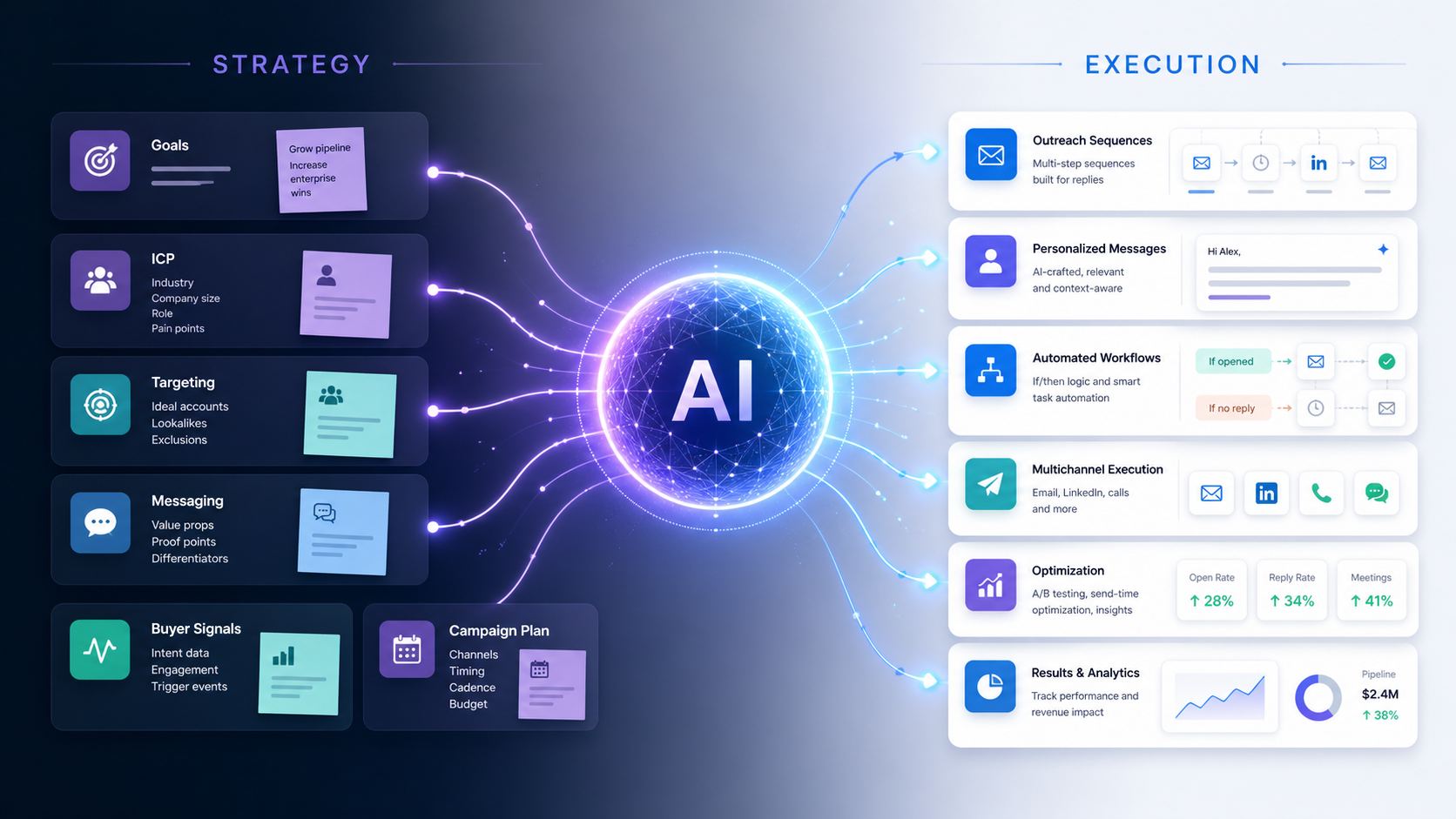
Teams can use intent-based lead scoring to find prospects who are more likely to care before a campaign starts. They can build multi-channel outreach across LinkedIn and email, use AI to write context-aware messages, and manage replies from one unified inbox.
Alsona's AI conversation agents can help handle replies, objections, and follow-ups so the campaign keeps moving without sounding like a generic sequence. Reps can stay involved where it matters, while AI handles the repetitive parts that usually slow campaigns down.
For teams running sales outreach automation, LinkedIn outreach automation, or email outreach automation, permission marketing is a useful filter. Every step should answer one question:
Has the prospect given us enough signal to earn the next message?
If the answer is yes, continue with context. If the answer is no, make the next ask smaller or stop.
A simple checklist for permission-based outbound campaigns
Before launching your next outbound campaign, review the basics:
- Is there a clear reason this audience should care now?
- Are you using intent signals before choosing leads?
- Does the first message ask for a small next step?
- Can the prospect say no easily?
- Does each follow-up respond to behavior or context?
- Are LinkedIn and email working together as one conversation?
- Can your team see replies, sentiment, and history in one place?
- Are unsubscribes, negative replies, and objections handled properly?
This checklist will not make a weak offer strong. It will help your campaign avoid the most common outbound mistake: acting like attention has already been earned.
Better outbound starts with more respect
Permission marketing does not make outbound timid. It makes outbound more precise.
You can still reach new prospects. You can still use automation. You can still run campaigns at scale. The difference is that every message earns the next step.
That is the version of outbound buyers are more likely to respond to. A message that shows respect and context has a better chance than a pitch that asks for a meeting before the prospect knows why they should care.
Alsona helps teams build that kind of outreach. Find the right prospects, write with context, follow up based on real signals, and let AI help turn interest into conversations.
Start your first Alsona campaign and see what permission-led outbound feels like in practice.