
December 17, 2025
From Zero to Pipeline: How One Small Business Built 100 Meetings in 90 Days on LinkedIn

Introduction
Every small business dreams of consistent pipeline growth, but most struggle to build it. LinkedIn offers access to decision-makers, but turning that access into booked meetings can feel like an uphill battle.
This is the story of how one small B2B company went from zero presence on LinkedIn to generating over 100 qualified meetings in just 90 days. The secret wasn’t luck or expensive ads. It was a structured outreach system that combined clear positioning, smart targeting, and safe LinkedIn automation, executed with discipline.
The process that worked for them can work for any business willing to focus on consistency, not complexity.
The Challenge
The company, a 5-person B2B service provider, faced a familiar problem: inconsistent lead flow and dependence on referrals. Their sales process was reactive, and they had no formal outbound strategy.
They needed a scalable way to:
- Reach new prospects beyond their local network
- Book consistent sales meetings every week
- Do it without hiring a full SDR team or spending on ads
Step 1: Define the Ideal Customer Profile (ICP)
Instead of chasing everyone, they focused on who was most likely to buy.
They analyzed their past clients and found three key traits:
- B2B service companies with 10–50 employees
- Decision-makers were typically founders or sales leaders
- Active on LinkedIn but with small marketing teams
This clarity shaped every outreach campaign that followed.
Step 2: Optimize the LinkedIn Presence
Before sending a single message, they transformed their LinkedIn profile into a landing page:
- Updated the headline to clearly state the value proposition
- Rewrote the “About” section with social proof and outcomes
- Added featured posts showcasing client results
When prospects viewed the profile, it looked trustworthy and results-oriented, not salesy.
Step 3: Build the Target List
Using LinkedIn Sales Navigator, they filtered prospects by:
- Role (Founder, Sales Director, Head of Growth)
- Industry (Marketing, Tech, Consulting)
- Geography (U.S. and Canada)
Each list contained 500–700 leads, segmented by niche to allow for personalized messaging.
Step 4: Craft the Outreach Framework
The messaging sequence focused on conversation, not conversion.
Connection Request:
“Hi {{FirstName}}, noticed we’re both active in the B2B sales space -thought it’d be great to connect.”
Message 1 (Value-Driven):
“Appreciate the connection! Quick question: are you still relying mostly on referrals for new clients, or have you been testing any outbound campaigns lately?”
Message 2 (Insight-Based Follow-Up):
“We recently ran a LinkedIn outreach campaign for a similar team that added 18 meetings in 4 weeks. Would you like me to share the setup we used?”
The tone was conversational, helpful, and curiosity-driven. No hard sells.
Step 5: Use Smart Automation for Consistency
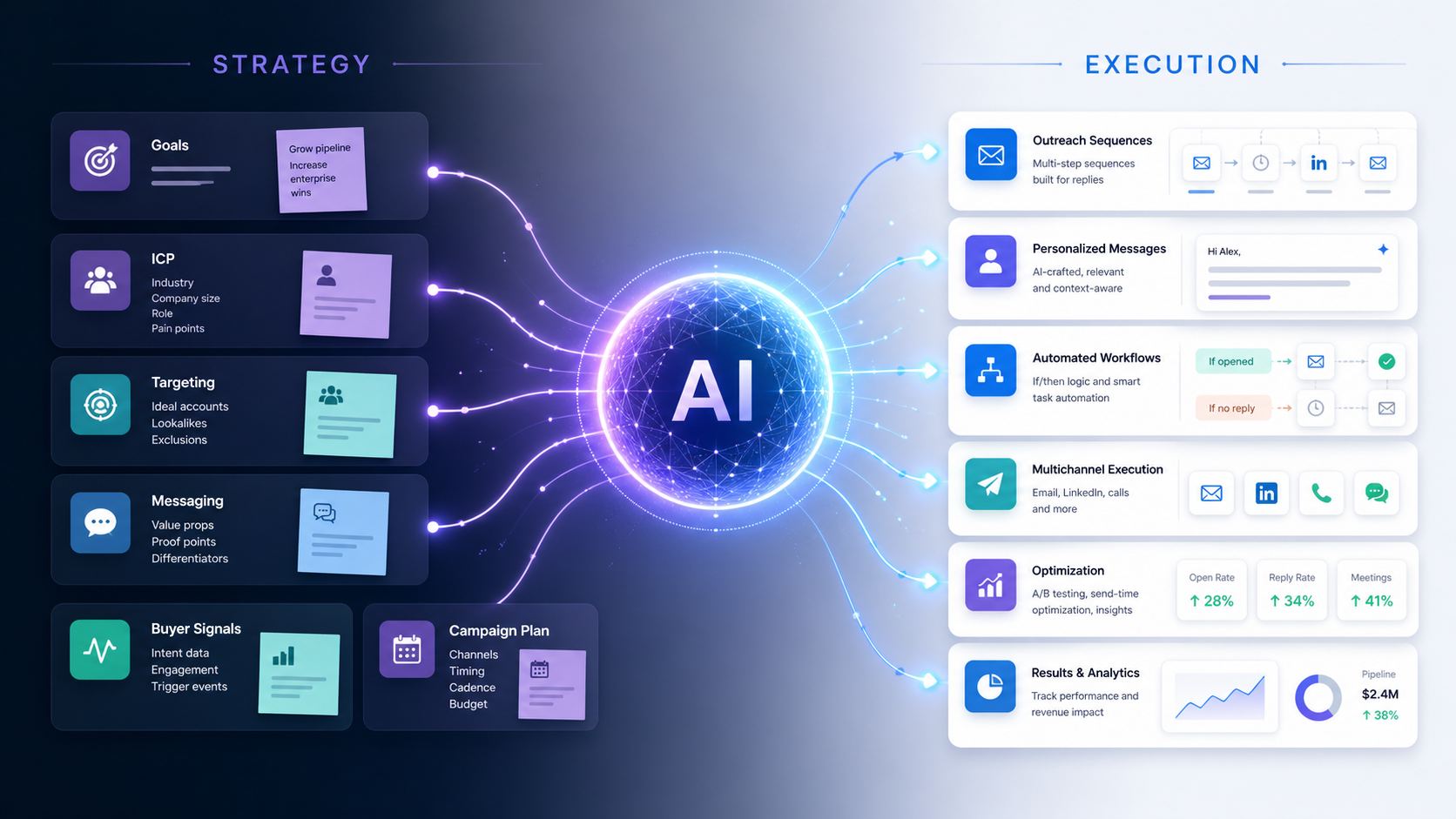
Manual outreach couldn’t keep up. The team used a safe, cloud-based LinkedIn automation platform to handle:
- Sending 20–30 connection requests per day
- Following up automatically after 3–5 days
- Tracking replies and pausing messages when responses came in
This ensured activity was steady and compliant, no mass blasting or browser plug-ins.
Step 6: Track, Test, and Adjust
Every week, the team reviewed:
- Connection Acceptance Rate: Averaged 42%
- Reply Rate: Averaged 27%
- Positive Responses: 11% (booked meeting or demo)
They tested small variations (subject lines, tone, CTAs) and doubled down on what performed best. The most effective message was always the simplest one.
Step 7: Nurture and Convert
The outreach campaign didn’t end with a “yes” or “no.” They built a nurture list of prospects who hadn’t replied and re-engaged them later with new case studies and insights.
This layered approach built familiarity over time, leading to additional meetings even after the initial 90 days.
Results After 90 Days
- 100+ qualified meetings booked
- 40% reduction in time spent on manual prospecting
- 3x increase in proposal volume
- 2 new long-term retainers closed within the quarter
Beyond the numbers, the real win was predictability. The company no longer relied on referrals -they had a system for continuous pipeline generation.
Key Lessons Learned
1. Consistency Beats Volume
Sending fewer, higher-quality messages daily produced better results than large-scale blasts.
2. Simplicity Wins
Short, friendly messages outperformed long explanations or complex offers.
3. Automation Needs Strategy
Tools amplify your process, they don’t replace it. Without clear targeting and message testing, automation just multiplies noise.
4. Data Drives Improvement
By measuring each step (connection, reply, and meeting booked) the team could refine and scale with confidence.
The Takeaway for Small Businesses
You don’t need a large team or massive budget to build a pipeline on LinkedIn. What you need is:
- A clear audience
- Compelling, relevant messaging
- Consistent daily activity (supported by safe automation)
- A process of continuous optimization
Start small, test everything, and scale what works.
In 2025 and beyond, the companies that master smart, human-first automation on LinkedIn will be the ones that grow fastest, regardless of size.