
December 10, 2025
AI vs Human SDRs: Who Wins the LinkedIn Outreach Game?


Sales development is changing fast. The rise of AI-powered outreach tools and LinkedIn automation platforms has sparked a new debate: can artificial intelligence outperform human SDRs (Sales Development Representatives) in building relationships and booking meetings?
For small businesses and B2B teams, this isn’t a philosophical question, it’s a strategic one. Human-led outreach is authentic but limited by time. AI-driven outreach scales effortlessly but risks losing the personal touch. The real answer isn’t one or the other. It’s understanding how each excels, and where they fail, to build a system that combines both.
How Human SDRs Approach LinkedIn Outreach
Human SDRs bring emotional intelligence, adaptability, and empathy -traits that AI still struggles to replicate. A skilled SDR can read tone, interpret subtle buyer cues, and pivot mid-conversation when needed.
Strengths of Human SDRs
- Real empathy and active listening
- Adaptability in unpredictable conversations
- Relationship-building over multiple touchpoints
- Contextual understanding beyond data points
Limitations of Human SDRs
- Limited bandwidth: one SDR can only send so many messages per day
- Inconsistent performance depending on skill and motivation
- High operational costs, especially for smaller teams
Human-led outreach shines when conversations require nuance, trust, or complex selling. But it struggles when scale, consistency, or speed is required.
How AI and Automation Are Transforming LinkedIn Outreach
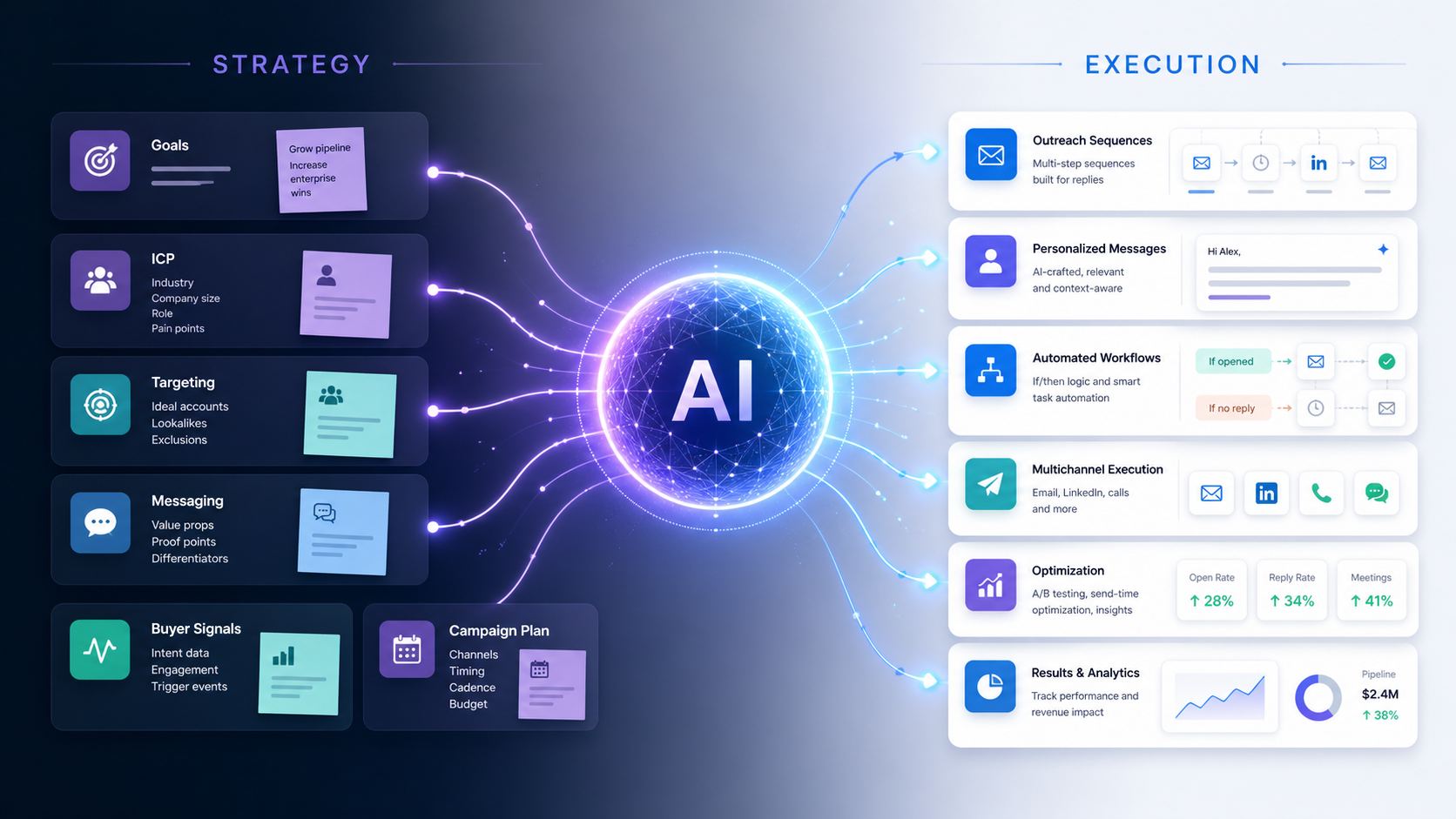
AI-powered LinkedIn automation tools now handle tasks once done manually: identifying leads, sending connection requests, and even writing personalized messages. But the best AI doesn’t just copy human behavior; it enhances it.
Strengths of AI and Automation
- Scales outreach to thousands of prospects safely
- Keeps messaging consistent and on-brand
- Provides analytics on response patterns and conversion rates
- Works 24/7 without fatigue or bias
Limitations of AI
- Can misinterpret tone or emotional nuance
- Risk of generic messaging if not guided by quality prompts
- Needs human oversight to maintain authenticity
AI excels at efficiency. It ensures that every potential lead gets touched, followed up, and tracked - something even the best human SDR teams can’t do manually.
The New Model: AI + Human Collaboration
The smartest companies aren’t replacing SDRs, they’re augmenting them. AI handles repetitive and time-consuming outreach tasks, while humans focus on what they do best: engaging in meaningful conversations and closing deals.
Step 1: AI Handles Prospecting
AI identifies the right audience, builds targeted lists, and prequalifies leads using filters like role, region, and activity level.
Step 2: AI Executes the First Outreach
Automation manages connection requests, initial messages, and first follow-ups. It ensures consistent activity while staying within safe limits.
Step 3: Humans Take Over When Interest Appears
When a prospect replies, SDRs step in to personalize responses, qualify interest, and book calls. AI hands off the conversation seamlessly.
Step 4: Continuous Optimization
AI analyzes performance data (reply rates, timing, tone) and suggests new message variants for humans to refine. The system learns over time.
Why AI Alone Doesn’t Win (Yet)
AI can simulate personalization, but it can’t feel empathy. It doesn’t understand context, timing, or emotional nuance in the way humans do. The best LinkedIn outreach campaigns still need a human to interpret cues, adjust tone, and know when not to message.
Automation without judgment turns outreach into noise. The human touch turns it into conversation.
Why Humans Alone Don’t Scale
Even the most talented SDRs hit capacity limits. A single rep can only manage a few hundred personalized messages and follow-ups per week. Without automation, opportunities are lost simply due to time constraints.
AI eliminates those bottlenecks, identifying, reaching, and organizing leads so SDRs can focus on quality engagement, not manual admin.
Real-World Example: AI-Assisted SDR Success
A small B2B software company replaced its manual LinkedIn prospecting with an AI-assisted workflow.
- AI handled lead identification, connection requests, and message sequencing.
- SDRs only engaged when replies came in.
- Within two months, meetings booked tripled, and reply rates increased by 35%.
The human SDRs didn’t lose their jobs, they became more effective. Instead of grinding through cold outreach, they spent their time having qualified conversations.
The Future: The AI-SDR Hybrid Era
By 2026, most high-performing outbound teams will operate on a hybrid model - AI for scale, humans for sense.
- AI will write 80% of first touches and handle follow-ups automatically.
- SDRs will intervene at key decision points and manage complex buyer interactions.
- Continuous data feedback will refine tone, timing, and targeting across campaigns.
This combination creates a cycle of constant learning where both humans and machines improve each other.
Conclusion
AI vs. human SDRs isn’t a battle, it’s a partnership. AI brings speed, data, and consistency; humans bring judgment, creativity, and empathy. Together, they create the most powerful outreach engine LinkedIn has ever seen.
For small businesses, this hybrid model levels the playing field against larger teams. It allows lean operations to generate enterprise-level impact - scaling intelligently, not mechanically.
The future of LinkedIn outreach won’t be decided by AI replacing humans, but by humans who learn to work with AI better than their competitors.